
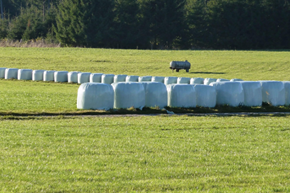
Regional Australian farms face demanding conditions when making and storing silage. High UV exposure, heat, wind and sudden weather changes can all affect bale protection. Choosing the right bale wrap 750mm and applying the correct number of layers can help create a durable seal around the wrapped forage.
For producers in Victoria, New South Wales, South Australia and other agricultural regions, wrapping performance depends on more than film width. Film quality, bale density, wrapping tension, overlap and storage conditions all influence how effectively the finished bale is protected. Understanding these factors can help reduce avoidable damage and preserve forage quality.
Why Layering Matters in Regional Australia
Silage stretch film must form a consistent barrier against oxygen and moisture. If the film is stretched unevenly or does not provide sufficient coverage, weak points can develop around the bale.
A bale wrap 750mm product can provide efficient coverage with compatible wrapping equipment, but always use the film according to the manufacturer’s specifications. Adding more layers may provide extra protection, but adding film alone is not a substitute for proper wrapping technique.
In high-UV areas, selecting a film designed for agricultural storage conditions is particularly important. Look for products with clearly stated UV protection and storage recommendations rather than assuming every agricultural film offers the same resistance.
Optimising Bale Wrap 750mm Layering
The ideal layering approach depends on the crop, bale density, film specification and expected storage period. Before wrapping, check the manufacturer’s recommended application settings.
Focus on Consistent Overlap
Consistent overlap helps prevent exposed areas between film passes. Adjust the wrapper so the film applies evenly around the entire bale.
Pay particular attention to:
● Film tension and pre-stretch settings
● Consistent overlap between passes
● Correct bale rotation
● Smooth, properly formed bales
● Secure film joins and cut points
Using 750 mm silage stretch film with equipment designed for that width can also help maintain consistent application.
Consider UV Exposure
UV radiation can gradually degrade exposed plastic, particularly when bales remain outdoors for extended periods. This makes film selection important for farms storing silage in exposed paddocks or open areas.
For example, producers searching for UV-resistant bale wrap Victoria should check the film’s stated UV protection, recommended storage conditions and suitability for the expected exposure period.
Choosing Agricultural Stretch Film 750mm
When comparing agricultural stretch film 750mm, don’t judge products solely on price per roll. Consider the amount of usable film, application consistency, puncture resistance and suitability for your wrapping equipment.
For farms purchasing 750mm bale wrap Australia-wide, product availability and transport conditions may also influence the practical choice. Buying from an established agricultural supplier can make it easier to obtain technical specifications and advice about machine compatibility.
Storage Still Matters
Even well-wrapped bales can be damaged after wrapping. Store bales away from unnecessary mechanical contact and inspect them regularly for punctures, tears or signs of deterioration.
Where possible, choose a storage location that reduces exposure to sharp objects, livestock and avoidable handling damage. Repair any punctures promptly using an appropriate silage film repair product.
Conclusion
Effective silage protection starts with choosing suitable film and applying it consistently. Bale wrap 750mm can be a practical option for compatible wrapping systems, but performance depends on correct tension, overlap, bale preparation and storage.
For challenging Australian conditions, select a film suited to the expected UV and weather exposure rather than relying on film width alone. Speak with an agricultural film supplier before purchasing to confirm the correct product and application settings for your equipment.
—
Frequently Asked Questions
1. What is bale wrap 750mm used for?
Bale wrap 750mm is agricultural stretch film used with compatible wrapping equipment to seal silage bales and protect forage from oxygen and moisture.
2. Is more wrapping always better for silage?
Not necessarily. The appropriate number of layers depends on the film, crop, bale characteristics and manufacturer’s recommendations. Consistent coverage is essential.
3. Is bale wrap suitable for Australia’s high-UV conditions?
Some products are manufactured with UV resistance for outdoor agricultural use. Always check the manufacturer’s stated UV protection and recommended storage period.
4. What should I look for in bale wrap 750mm Australia?
Consider film quality, UV resistance, puncture resistance, stretch characteristics, equipment compatibility and the supplier’s technical guidance.
5. How should wrapped bales be stored?
Keep bales away from sharp objects, livestock and unnecessary handling. Regularly inspect the film and repair punctures promptly to maintain the seal.