
A bale wrapper is a farm implement used to wrap silage bales in plastic. This wrapper is a helpful tool that saves time and money on the farm. Several wrappers include silage wrap, Net wrap, and Tube-wrap, and each type has its advantages and disadvantages.
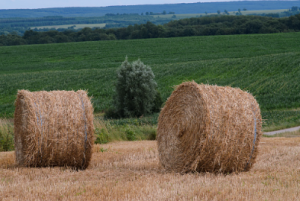 Net wrap
While there are many benefits to using a net wrap for bale wrap, there are also some drawbacks. For starters, bale wrap made of the net is more likely to freeze solid to the ground, and removing frozen twine can be difficult. Also, it is more expensive than using twine. Nevertheless, the net wrap can speed up the baling process and reduce dry matter loss.
It is crucial to choose a round baler that is designed to use the net wrap. Fortunately, several brands are available, and most major manufacturers have a model that works well with net wrap. For example, you can find Syfilco Bale Net Wrap in Canada and Gardien the Protector(tm) Net Wrap.
Net wrap is also more environmentally friendly. The material reduces waste and lowers storage costs. In addition, bales wrapped with net wrap retain their shape and are more stable in storage. The nets also prevent moisture from penetrating the bales, making them more energy efficient.
Sisal twine
Sisal twine for bale wrap is an excellent choice for various reasons. It is biodegradable and resistant to insects and vermin. It is also durable and can withstand a wide range of fasteners. In addition, sisal twine is woven with the highest quality machinery for the best results.
While sisal twine is a beautiful, natural option, it is not without its drawbacks. One of the main drawbacks is its cost. It can be twice as expensive as plastic twine per foot. Additionally, the cost per bale depends on how many bales need wrapping.
Another drawback is that twine is hard to pick up after bale grazing and can easily get entangled with leftover feed. In addition, leaving the twine on the ground is unsanitary and can be dangerous for livestock. If left unattended, it can get tangled in the cattle’s hooves, legs, or head. It can lead to digestive problems for cattle. In addition, producers report that the twine can sometimes get caught in ear tags, pulling them out from the animal’s ear.
Silage wrap
The primary purpose of silage wrap on bales is to limit air and lock it out from within the bale. If the air can get in, microorganisms in the hay will start to consume the nutrients, causing the bale to spoil. Additionally, this process creates heat, which can damage the crop. Consequently, limiting air and moisture will preserve the nutritional value of the feed for livestock.
When choosing a silage wrap, choose one with multiple layers. The outer layers should contain a UV stabilizer, while the inner layers should be able to resist punctures. Also, choose a wrap with the correct thickness, and wrap the bale within 24 hours. The sooner you wrap the bale, and the more oxygen will be trapped inside the bale, preventing the fermentation in dry baling.
When using bale wrap, it’s important to remember that animals can chew through the plastic and create tiny holes. These holes can let air, moisture, and acid into the bales. To prevent this, you can also purchase unique silage covers that protect the bale from animals and prevent surface mould on dry feed.
Tube-wrap
The Tube-wrap bale wrapper is an effective way to protect bales and reduce losses due to weathering. It works by stretching plastic onto a bale and layering plastic on top of one another and is suitable for all shapes and sizes of bales. In addition, this wrapper can be easily re-used and used on large or small bales.
Tube-wrap bale wrap machines are available from a variety of manufacturers. Their main advantage is speed: they can wrap up to 60 bales per hour, and in some cases, more, depending on how much plastic is applied. Another advantage of the Tube-wrap wrapper is that it uses less plastic than other wrappers.