
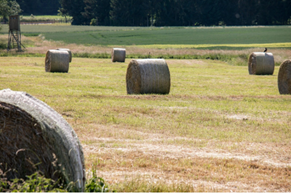
Wet conditions in Gippsland can make bale handling more challenging, especially when dense fodder is baled before stretch-film wrapping. A high-performance net wrap can help manage this risk by promoting faster water shedding across the bale surface. Tight-weave construction and suitable HDPE resin properties help rain move away from exposed fodder rather than remain trapped against the crop.
This is especially relevant for dairy operations across Victoria, where silage bales may be exposed to frequent rainfall before collection and wrapping. Choosing the right net wrap can help protect bale integrity and reduce conditions that encourage surface mould.
Why Water Shedding Matters in Gippsland
Gippsland’s dairy regions are well known for productive pasture systems, but wet weather can complicate the period between baling and stretch-film application. When rain reaches an unwrapped bale, moisture can remain on uneven surfaces, particularly where the bale has loose shoulders or inconsistent density.
A high-performance net wrap creates a more uniform outer layer around the bale. Its tight weave can help reduce exposed gaps between strands, allowing water to run across the surface rather than penetrating directly into the outer crop layer.
This does not make a bale waterproof. Net wrap is designed to contain and protect the bale, not replace appropriate plastic wrapping or weather protection.
How Tight Weave Density Supports Rain Shedding
Consistent Coverage Across the Bale
Net wrap weave density influences how closely the strands cover the bale. A well-engineered agricultural baling product provides consistent coverage from edge to edge, helping minimise exposed areas where rain can more easily reach the fodder.
This is particularly useful for high-density silage bales, where maintaining a compact shape and stable outer surface can make subsequent handling and wrapping more consistent.
HDPE Resin and Surface Water
The polymer used in net wrap also affects its performance. High-density polyethylene (HDPE) is widely used because it offers the strength, flexibility, and resistance required for agricultural applications.
For operations seeking water-resistant, high-performance net wrap for dairy, Victoria suppliers should consider products with a suitable resin formulation and a tightly controlled manufacturing process. Water repellence can encourage droplets to move across the net rather than remain attached to individual strands.
Reducing Surface Moisture Before Stretch Wrapping
The period between baling and stretch-film wrapping deserves attention. If rain repeatedly wets the outside of an unwrapped bale, persistent surface moisture can create less favourable storage conditions.
A high-performance net wrap can help by supporting rapid drainage while maintaining bale shape. However, the net wrap should be considered one part of the preservation process.
Farmers and contractors should also focus on:
● Baling at the appropriate crop moisture for the intended silage system
● Producing dense, evenly formed bales
● Moving bales to wrapping promptly
● Avoiding unnecessary exposure to prolonged rainfall
● Checking bales for damaged or loose netting before wrapping
● Applying stretch film according to the film manufacturer’s requirements
Choosing Net Wrap for Victorian Dairy Operations
When comparing products for Gippsland conditions, look beyond basic roll length or price. A water-resistant, high-performance net wrap suitable for Victorian dairy operations should provide reliable coverage, adequate tensile strength and consistent feeding through the baler.
Baler compatibility is equally important. Net wrap that feeds smoothly and maintains tension can reduce uneven application, loose edges and poorly covered sections.
Contractors should also consider how consistently the product performs across different crops, bale densities and operating speeds.
Conclusion
Effective water shedding starts with the right bale construction and a net wrap designed for reliable surface coverage. In wet Gippsland pastures, tight weave density and suitable HDPE characteristics can help rain run off high-density silage bales as they await stretch-film wrapping.
A high-performance net wrap is not a substitute for timely wrapping, but it can provide an important layer of protection during this critical handling period. Choose a product suited to your baler, crop and local conditions, then pair it with prompt stretch-film application for better bale protection.
Looking for dependable net wrap for Victorian dairy and silage operations? Compare weave density, resin quality, feeding performance and bale coverage before choosing your next product.
—
Frequently Asked Questions
1. Does net wrap make silage bales waterproof?
No. Net wrap helps contain the bale and can promote water shedding, but it is not a waterproof barrier. Stretch film remains essential for properly wrapped silage.
2. Why is weave density important for rain shedding?
A tight, consistent weave provides more uniform bale coverage, helping rain move across the outer surface instead of reaching exposed sections of the crop.
3. Is HDPE suitable for agricultural net wrap?
Yes. HDPE is commonly used for agricultural net wrap because it provides the strength, flexibility, and durability needed for baling applications.
4. Can net wrap reduce mould formation?
It can help limit prolonged surface wetting by encouraging water to shed from the bale. However, mould prevention also depends on crop moisture, bale density, wrapping timing and storage conditions.
5. What should Gippsland dairy farmers look for in net wrap?
Look for consistent weave density, reliable tensile strength, good bale coverage, smooth baler feeding and compatibility with the equipment and silage system being used.