
For Australian farmers managing hay, pasture, or forage preservation, choosing between silage plastic systems can significantly affect both feed quality and operating costs. In this context, silage plastic refers broadly to agricultural-grade polyethylene films used to seal forage for anaerobic fermentation, but not all products function the same way in practice.
Understanding the real differences between silage plastic sheets used for pit covering and silage wrap film used for bale wrapping is essential if you want to reduce waste, improve feed quality, and ultimately save money in Australia’s demanding climate.
What is Silage Plastic?
Silage plastic is a heavy-duty, UV-stabilised polyethylene film used to exclude oxygen from stored forage, allowing it to ferment properly. In Australia, it is designed to withstand extreme heat, strong UV exposure, and variable rainfall conditions. High-quality versions are typically multilayer LLDPE films engineered for strength, stretchability, and puncture resistance.
Its main purpose is to preserve nutrients by creating an airtight seal that prevents spoilage and mould growth—critical for livestock productivity during dry seasons.
What is Silage Wrap Film?
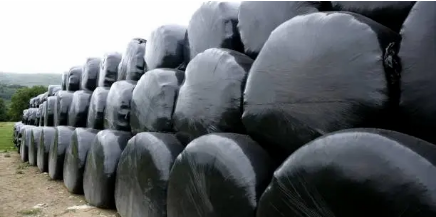
Silage wrap film is a specific type of silage plastic used primarily in round and square bale wrapping systems. Instead of covering a large silage pit, it is stretched around individual bales using a wrapping machine.
Each bale is wrapped in multiple layers to form an oxygen barrier, enabling controlled fermentation inside the bale. Modern wrap films in Australia are usually 5–7-layer constructions designed for high stretch and puncture resistance.
In simple terms:
● Silage plastic = covers bulk silage pits or bunkers
● Silage wrap film = wraps individual bales
Key Differences Between Silage Plastic and Silage Wrap Film
Although both products serve the same biological goal (anaerobic fermentation), their applications, efficiencies, and cost structures differ significantly.
1. Application Method
● Silage Plastic: Laid over large silage piles or bunkers and weighted down with tyres or gravel.
● Silage Wrap Film: Applied layer-by-layer around individual bales using machinery.
In Australia, wrap film dominates in smaller to medium-scale livestock operations, while pit silage plastic is common in large dairy or feedlot systems.
2. Material Efficiency and Waste
Wrap film uses precision layering, which reduces oxygen exposure at the bale level but generates more consumable film per unit of feed.
Silage plastic sheets, by contrast, cover large volumes at once, meaning:
● Lower plastic per tonne of feed (more efficient at scale)
● But higher risk of spoilage if sealing or weighing is inconsistent
3. Labour and Machinery Costs
Wrap film requires:
● Baler + wrapper system
● Higher fuel and machinery maintenance
● Faster handling but more equipment dependency
Pit silage plastic requires:
● Loader tractors and covering labour
● Fewer machines but more manual handling
4. Weather Performance in Australia
Australian conditions are a major deciding factor:
● High UV exposure accelerates the degradation of low-quality films
● Heat increases the risk of oxygen permeability
● Strong winds can lift or damage poorly weighted pit covers
Modern multilayer silage films are designed to resist these conditions, improving durability and reducing spoilage risk in both systems.
Which One Actually Saves More Money?
This depends less on the product itself and more on farm scale, labour availability, and feed management strategy.
When Silage Plastic (Pit Covers) Saves More Money
Best for:
● Large-scale dairy or feedlot operations
● Farms with bulk forage storage systems
● Labour-efficient operations
Why it saves money:
● Lower cost per tonne of silage stored
● Fewer consumables compared to individual bale wrapping
● Strong economies of scale
Key risk:
If sealing is poor or the cover is damaged, spoilage losses can quickly outweigh cost savings.
When Silage Wrap Film Saves More Money
Best for:
● Mixed livestock farms
● Hay contractors
● Farms needing flexible storage and transport
Why it saves money:
● Reduced feed wastage per bale due to consistent sealing
● Easier transport and distribution
● Lower dependence on large storage infrastructure
Key cost factor:
Higher plastic usage per tonne and ongoing machinery requirements increase operational expenses.
Cost Efficiency Comparison (Australia-Focused)
Upfront material cost
● Silage plastic (pit covers): Lower per tonne
● Silage wrap film (bale wrap): Higher per bale
Labour requirement
● Silage plastic: Moderate labour needed
● Silage wrap film: Lower labour per unit, but higher reliance on machinery
Spoilage risk
● Silage plastic: Higher if poorly managed or sealed
● Silage wrap film: Lower per bale due to individual sealing
Scalability
● Silage plastic: Excellent for large-scale farm operations
● Silage wrap film: Better suited to flexible or mixed farming systems
Transport efficiency
● Silage plastic: Low (bulk storage, not easily moved)
● Silage wrap film: High (individual bales are easy to transport)
The Real Answer: Which One Is More Cost-Effective?
In Australian farming conditions, the most cost-efficient system is not determined solely by the plastic—it depends on how well the storage method matches your production system.
● Large-scale operations typically reduce cost per tonne using silage plastic pit covers
● Flexible or smaller operations often achieve better real-world savings with silage wrap film
Final Takeaway
The difference between silage plastic and silage wrap film comes down to scale versus flexibility.
Both rely on UV-stabilised polyethylene engineered for Australian conditions, but their economic performance diverges based on how the feed is stored and handled.
In practice:
● Large farms generally gain better cost efficiency with pit silage plastic systems
● Smaller and diversified farms often benefit more from silage wrap film systems
Ultimately, the biggest cost driver is not the material itself—but how effectively you prevent spoilage and align the system with your farm workflow.